About Android
Android is an open-source mobile operating system developed by Google and based on the Linux kernel. It is designed primarily for touchscreen devices such as smartphones and tablets, but is also used in smart TVs, wearables, and other smart devices. Most Android devices come with Google Mobile Services (GMS), including applications like Google Play Store and Google Chrome. Android apps can be distributed through various app stores such as Google Play Store, Amazon Appstore, Samsung Galaxy Store, Huawei AppGallery, F-Droid, Aptoide, APKPure, and APKMirror.
Brief History
Android was founded in 2003 by Andy Rubin, Rich Miner, Nick Sears, and Chris White. Google acquired Android Inc. in 2005 and continued its development. The first commercial Android device, the HTC Dream (T-Mobile G1), was released in 2008. Early Android versions were named after desserts, including Cupcake, Donut, Eclair, and Froyo. Google later introduced the Nexus series in 2010, Android One in 2014, and the Pixel lineup in 2016. Starting with Android 10 (2019), Google discontinued dessert-based version names.
Android Versions
Android versions are identified by a version number and API level, which developers use for compatibility. Major releases include:
- Android 10 (API 29) – 2019
- Android 11 (API 30) – 2020
- Android 12 (API 31/32) – 2021–2022
- Android 13 (API 33) – 2022
- Android 14 (API 34) – 2023
- Android 15 (API 35) – 2024
- Android 16 (API 36) – 2025 (Beta)
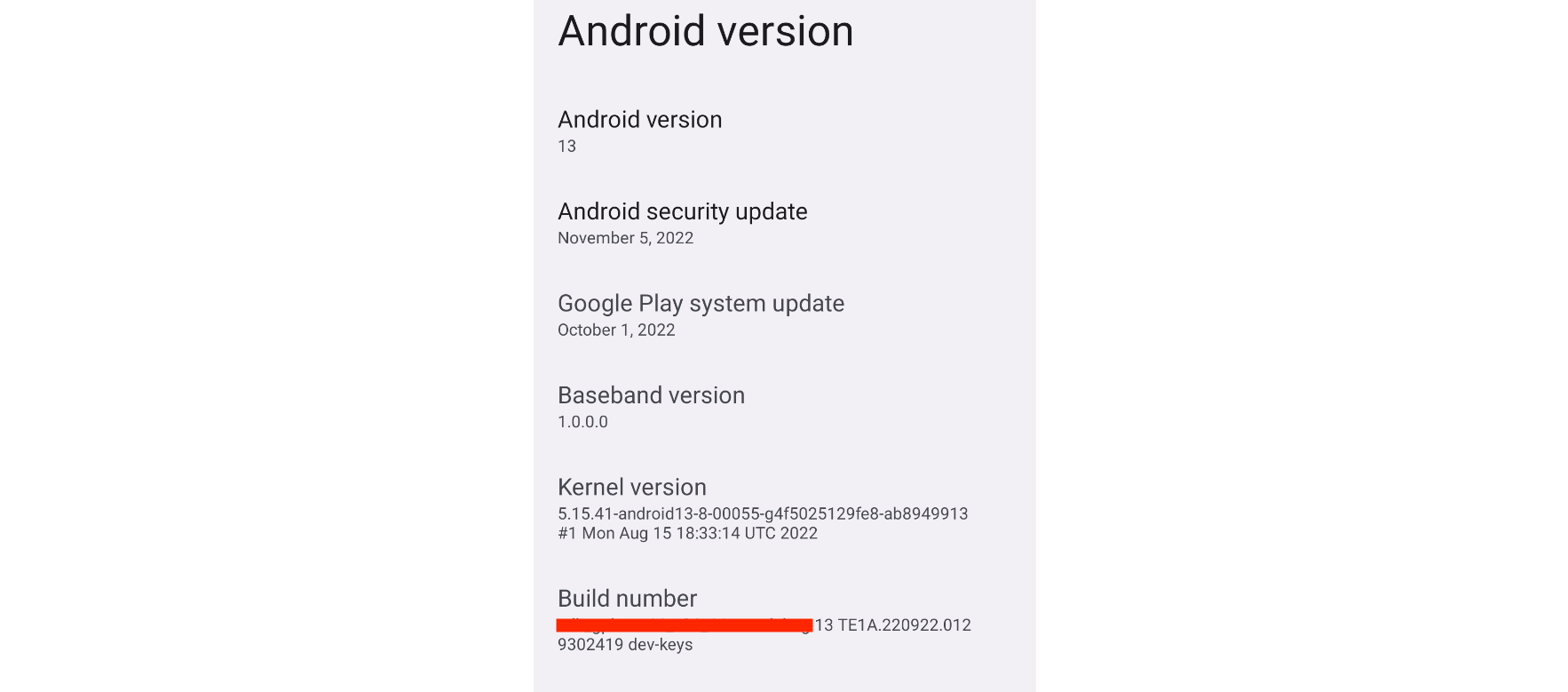
The Android version of the device, along with other information, can be found under Settings -> About emulated device -> Android version.
Hardware Architecture
Most Android devices use the ARM (AArch64) architecture, while some devices and emulators support x86 and x86-64 architectures. Android devices typically include hardware components such as:
- Camera
- GPS
- Accelerometer
- Gyroscope
- Magnetometer
- Proximity sensor
- Barometer
- Touchscreen
- Microphone and speakers